Merrylands 2160: Suburb Profile and Property Market Report
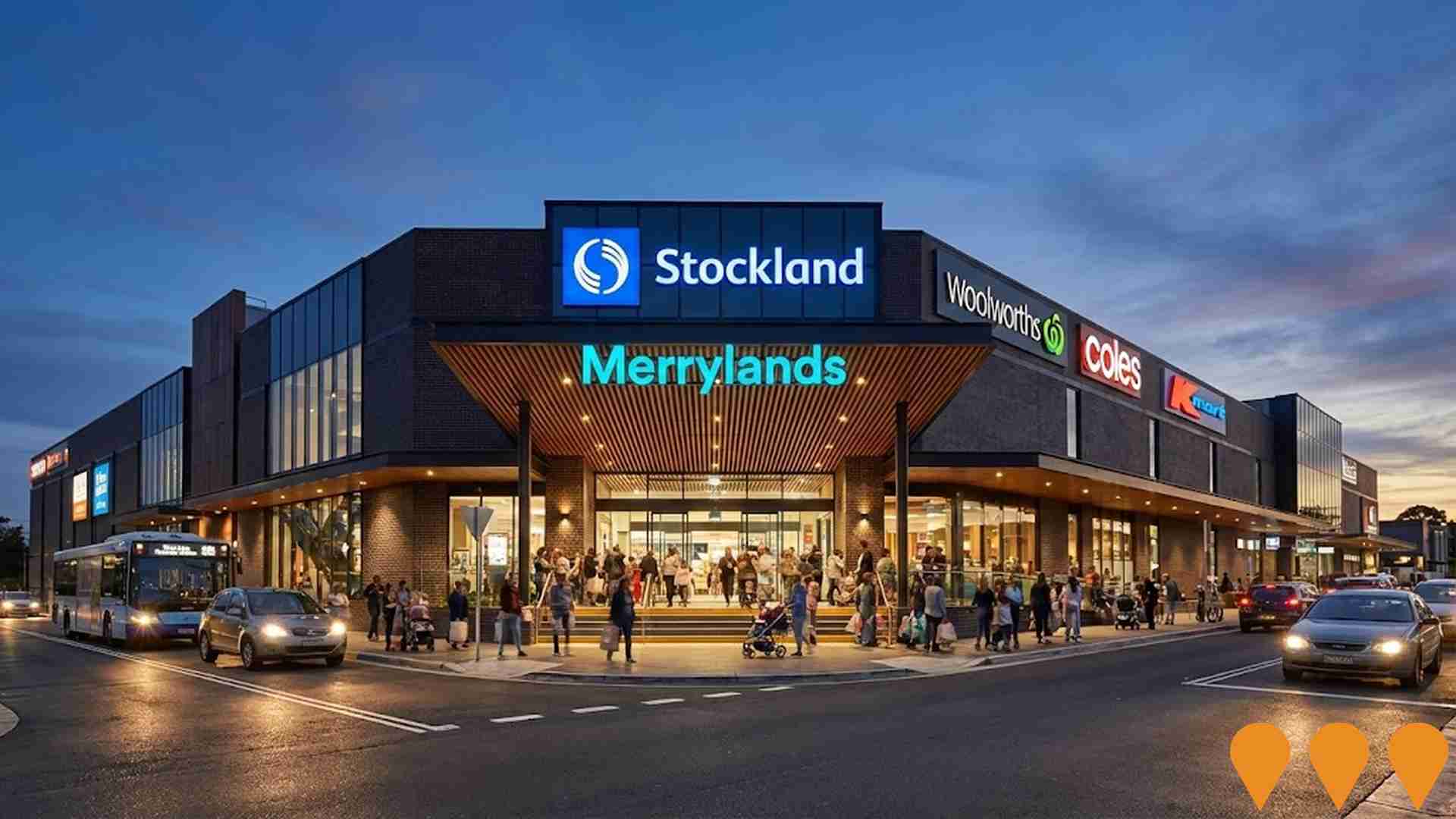
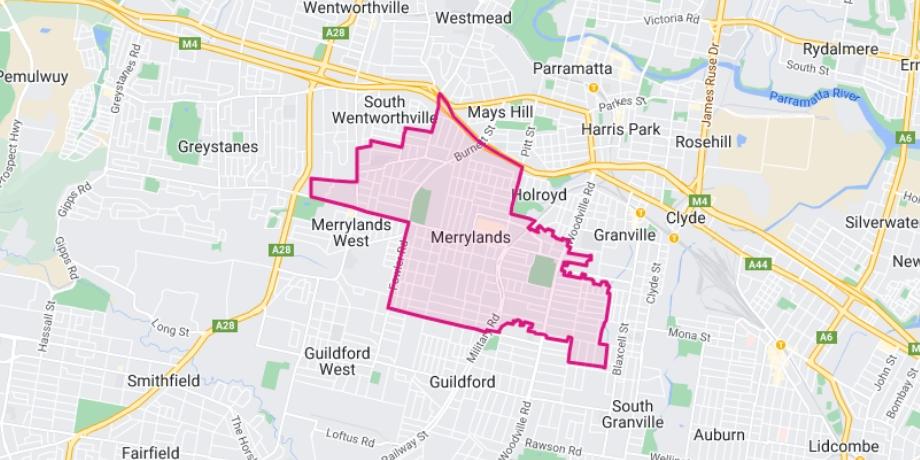
Merrylands is one of the more established and strategically positioned suburbs within the Cumberland City Council area. Located approximately 25 kilometres west of the Sydney CBD and close to Parramatta, the suburb benefits from a large residential population, strong rental demand, established retail infrastructure and ongoing public and private investment. Overall, Merrylands should be viewed as a functional, high-demand Western Sydney market with strong rental fundamentals, established amenity and ongoing town-centre transformation.
1. Economic Output and Regional Position
Merrylands sits within the broader Merrylands–Guildford economic area, which plays an important role in the Cumberland City Council local government area. The region generates approximately $29.2 billion in annual economic output, representing around 1.7% of the gross state product of New South Wales.

This positions Merrylands as more than a residential suburb. It forms part of a broader employment and service corridor supported by manufacturing, health care and social assistance, construction, retail trade and local service industries.
The manufacturing sector remains a major contributor to regional output, accounting for approximately 16.53% of local economic activity. Health care and social assistance, construction and retail trade also provide significant employment and business activity.
For property investors and vendors, this economic base is relevant because it supports local housing demand. A suburb with access to employment, services and retail activity is more likely to attract tenants, first-home buyers and long-term owner-occupiers.
Merrylands also benefits from its position near Parramatta, one of Sydney’s most important commercial and employment centres. This gives the suburb an important affordability advantage. Buyers and renters who want access to Parramatta, but may not want to pay Parramatta-level prices, often consider nearby suburbs such as Merrylands, Granville, Guildford and Holroyd.
2. Demographics and Labour Supply
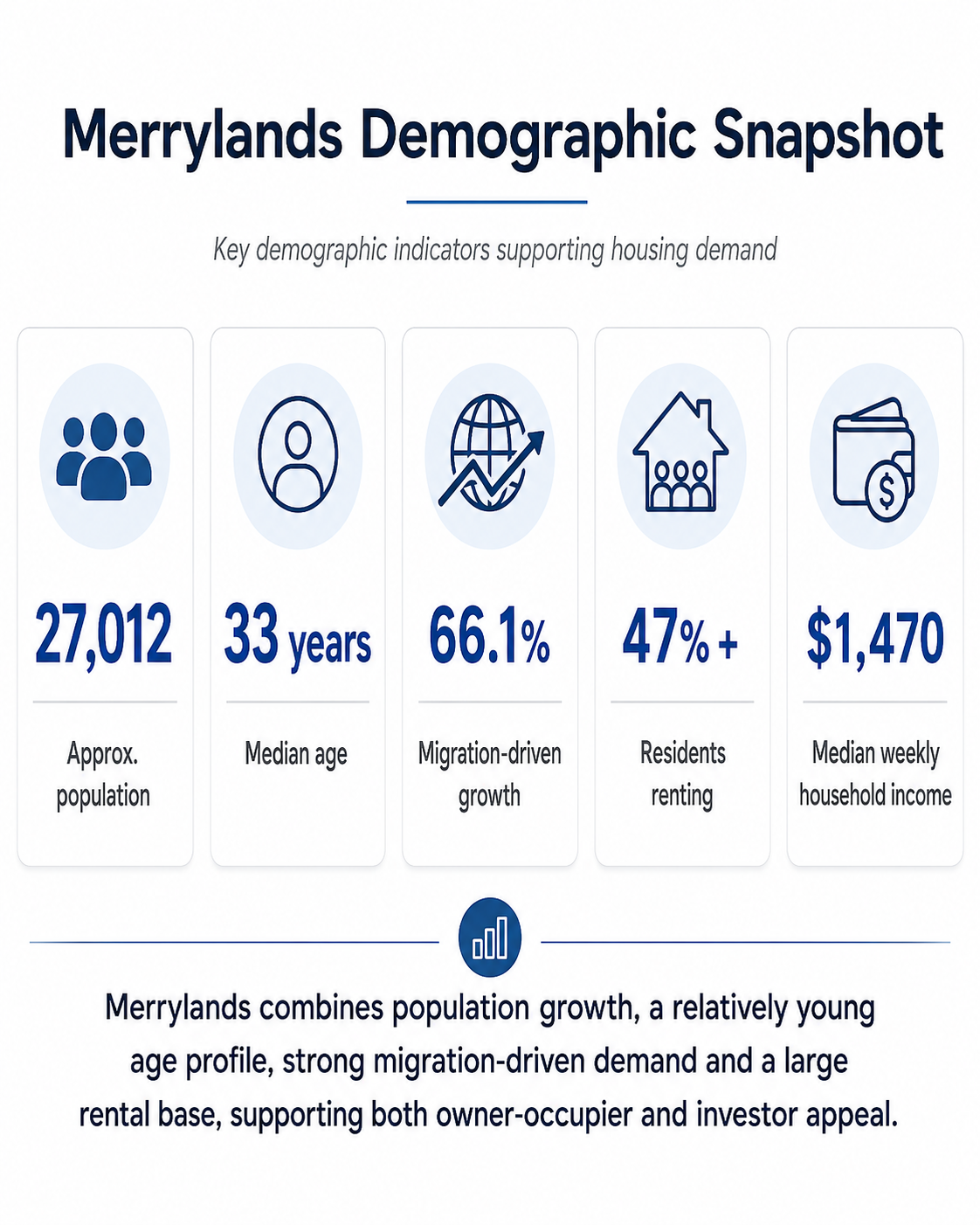
Merrylands has a strong and diverse residential base. The immediate Merrylands–Holroyd area has a population of approximately 27,012 residents and recorded population growth of 13.5% between the last major census periods. This was above the New South Wales average growth rate of 7.1%.
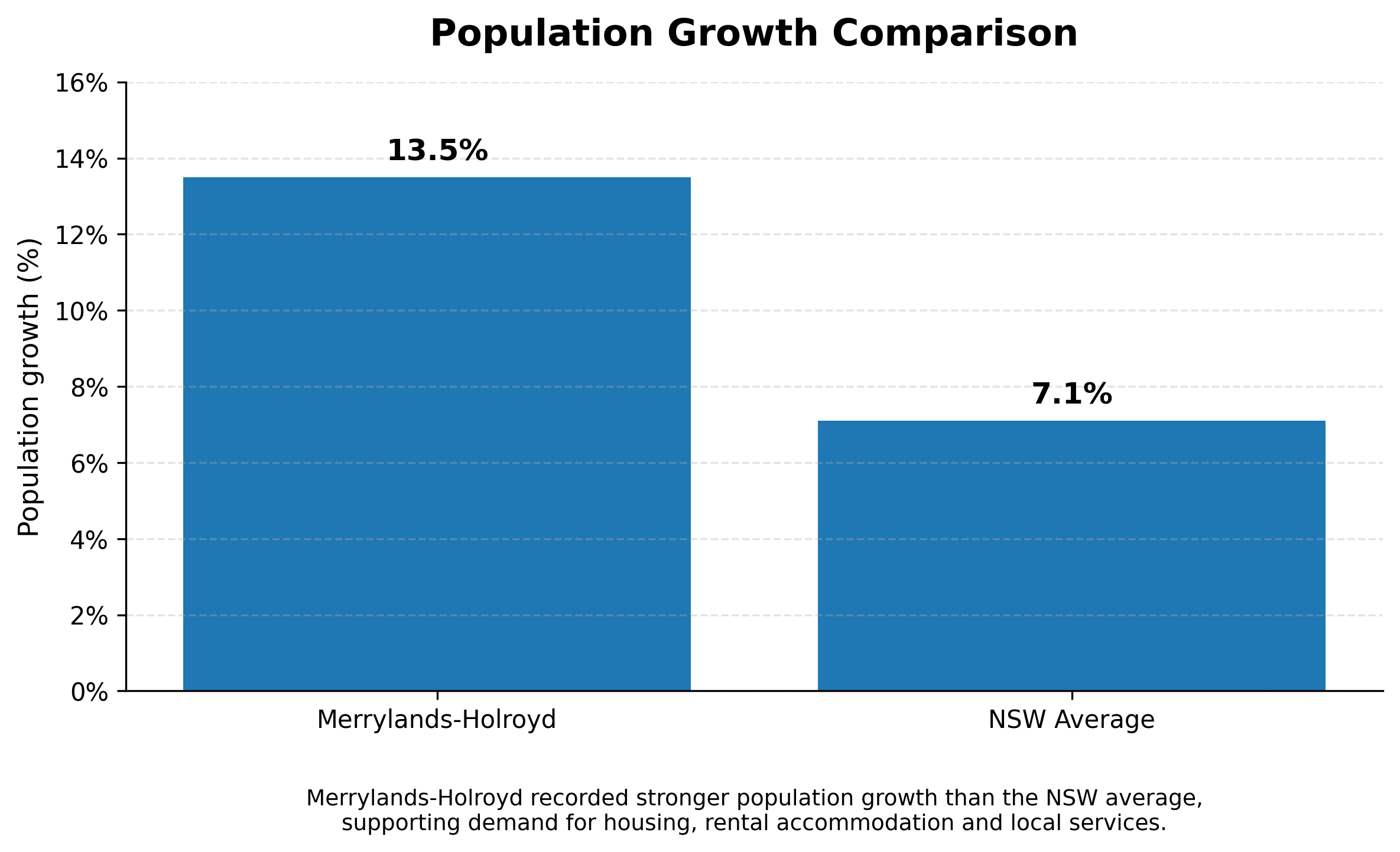
Population growth is an important driver of housing demand. A growing suburb generally requires more rental accommodation, more owner-occupied housing and stronger local services. For Merrylands, this demand is supported by both local household formation and migration.
Overseas migration is a major demographic driver, accounting for approximately 66.1% of local population gains. This gives Merrylands a broad and multicultural tenant and buyer base, which is particularly relevant for investors and vendors. Migrant households, young families and multi-generational households often place high value on transport access, retail convenience, schools, community networks and proximity to employment.
The suburb also has a relatively young population profile. The median age is approximately 33 years, compared with the New South Wales median age of 39. The dominant age cohort is concentrated in the 20–29 age bracket. This supports rental demand, first-home buyer activity and demand for apartments, townhouses and affordable family homes.
Median weekly household income is approximately $1,470 per week, positioning Merrylands as an accessible middle-income market. The suburb also has a high rental population, with more than 47% of residents living in rental accommodation.
For investors, this indicates a large and active tenant pool. For vendors, it means properties with clear rental appeal may attract both owner-occupiers and investors, particularly where rental return can be demonstrated through comparable lease evidence.
3. Residential Property Market Metrics
The Merrylands property market shows a clear split between detached houses and multi-unit dwellings.
Detached houses have a significantly higher median value, reflecting land scarcity, family demand and the limited supply of freestanding homes. Units and apartments sit at a lower price point, making them more accessible to first-home buyers and investors seeking stronger rental yield.
Current market indicators suggest the following broad profile*:
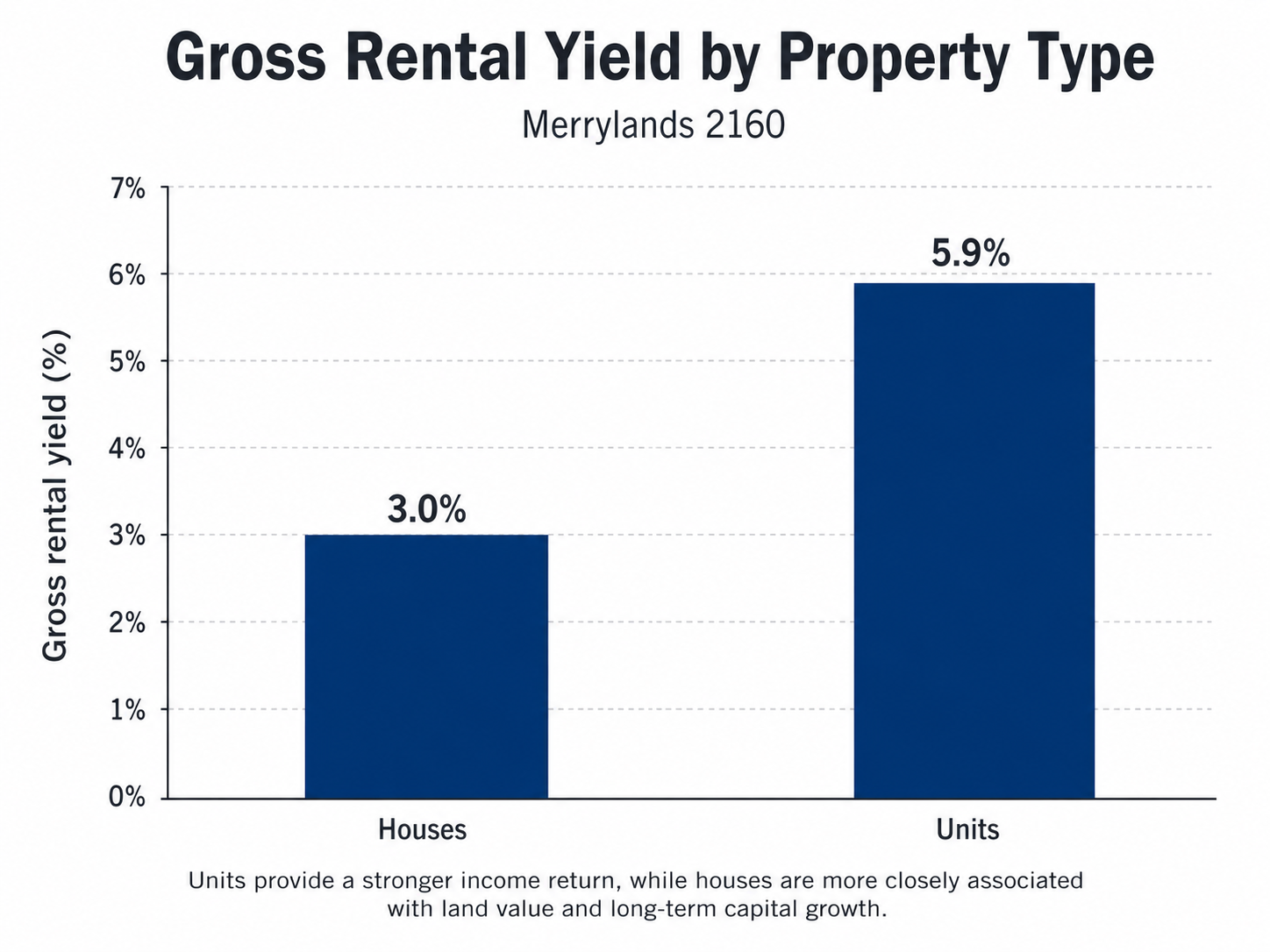
- Detached houses have a median value of approximately $1.42 million, a gross rental yield of around 3.0%, average days on market generally between 31 and 44 days, and a local vacancy rate around 1.4% .
- Units and apartments have a median value of approximately $530,500, a gross rental yield of around 5.9%, average days on market generally between 27 and 33 days, and a similar local vacancy rate of around 1.4%.
*(Data from Property.com.au, HTAG, NSW Government & Realestate.com.au)
Detached Housing Sector
Detached housing in Merrylands remains relatively constrained. Long average ownership tenure, estimated at around 12.1 years, indicates that many owners hold property for the long term. This limits available supply and can support price resilience, especially for well-located homes with land value, parking, renovation potential or development upside.
Annual capital growth for houses has been reported between approximately 5.2% and 7.6%, with stronger performance in some nearby pockets such as Merrylands West. This suggests that houses remain the more capital-growth-oriented segment of the market.
For vendors, detached homes should be positioned around their land component, family functionality, rental potential, renovation upside and proximity to transport, schools and retail amenities. For investors, houses may offer lower gross yield than units, but may appeal where the objective is long-term capital growth and land banking.
Multi-Unit Sector
The unit and apartment sector plays a different role in the Merrylands market. Units offer a lower entry price and stronger rental yield, with median unit rent around $610 per week and gross rental yields around 5.9%.
This makes units attractive to yield-focused investors and first-home buyers who want affordability and convenience. Merrylands’ apartment market is supported by access to shops, public transport, local employment and proximity to Parramatta.
However, high-density dwellings account for a large share of new residential development approvals in the suburb. This means future apartment supply needs to be considered carefully. Additional supply can improve the suburb’s amenity and population base, but it can also cap short-term apartment capital growth if many similar properties enter the market.
For unit owners and apartment investors, property selection is critical. Stronger-performing units are likely to be those with practical layouts, secure parking, good natural light, balconies, low or reasonable strata costs, lift access where relevant, and walkability to Merrylands Station, Stockland Merrylands and the town centre.
4. Buyer and Tenant Demand Drivers
Merrylands benefits from a broad demand base. This is one of the suburb’s key strengths.
The suburb appeals to families who need access to schools, shops, transport and larger homes. It appeals to renters who want access to Parramatta and surrounding employment areas without paying premium Parramatta rents. It also appeals to first-home buyers and investors looking for a more affordable entry point into an established Western Sydney market.
The high proportion of renters supports ongoing leasing demand. The younger age profile also supports demand for apartments, townhouses and smaller dwellings. At the same time, the multicultural and family-oriented nature of the suburb supports demand for larger homes, properties with multiple living areas, parking and flexible accommodation.
For investors, this means Merrylands has multiple tenant segments rather than relying on one narrow source of demand. For vendors, this means a well-presented property can be marketed to different buyer groups depending on its features: A house may appeal to families, builders, renovators, investors or multi-generational households. A unit may appeal to first-home buyers, downsizers, investors, young professionals or tenants seeking convenience.
5. Risks and Watch Points
Although Merrylands has a positive long-term profile, there are several risks that owners and investors should monitor.
Future apartment supply may place pressure on older units, especially if new buildings offer better finishes, amenity and convenience. Interest rate sensitivity may affect buyer borrowing capacity and investor demand. Traffic congestion around major roads such as Woodville Road and Merrylands Road may remain a concern for some buyers.
Older housing stock may also require capital expenditure, particularly where properties have not been updated for many years. Strata costs, building maintenance and special levies, for example, can affect both investor returns and buyer interest.
Planning and construction timelines are another risk. Infrastructure and development proposals can support confidence, but they may take years to complete and can change during the approval process.
For this reason, Merrylands should not be assessed only on suburb-level growth. The individual property remains the most important factor.
Overall Outlook
Merrylands presents as a practical and resilient Western Sydney property market. It has a strong rental base, established retail and transport amenity, proximity to Parramatta, a young and diverse population, and ongoing investment in public and private infrastructure.
As an investment, the suburb offers a combination of rental demand and long-term growth potential. Houses are more closely linked to land value and family demand, while units provide stronger income returns and a more affordable entry point.
From a sales perspective, the suburb’s changing profile can be used to strengthen the marketing narrative, particularly where the property has clear advantages such as location, land size, rental return, parking, internal space or development potential.
Overall, Merrylands is moving toward a more integrated town-centre model, with stronger links between housing, retail, transport and local services. This supports its appeal to investors, owner-occupiers and long-term property holders.