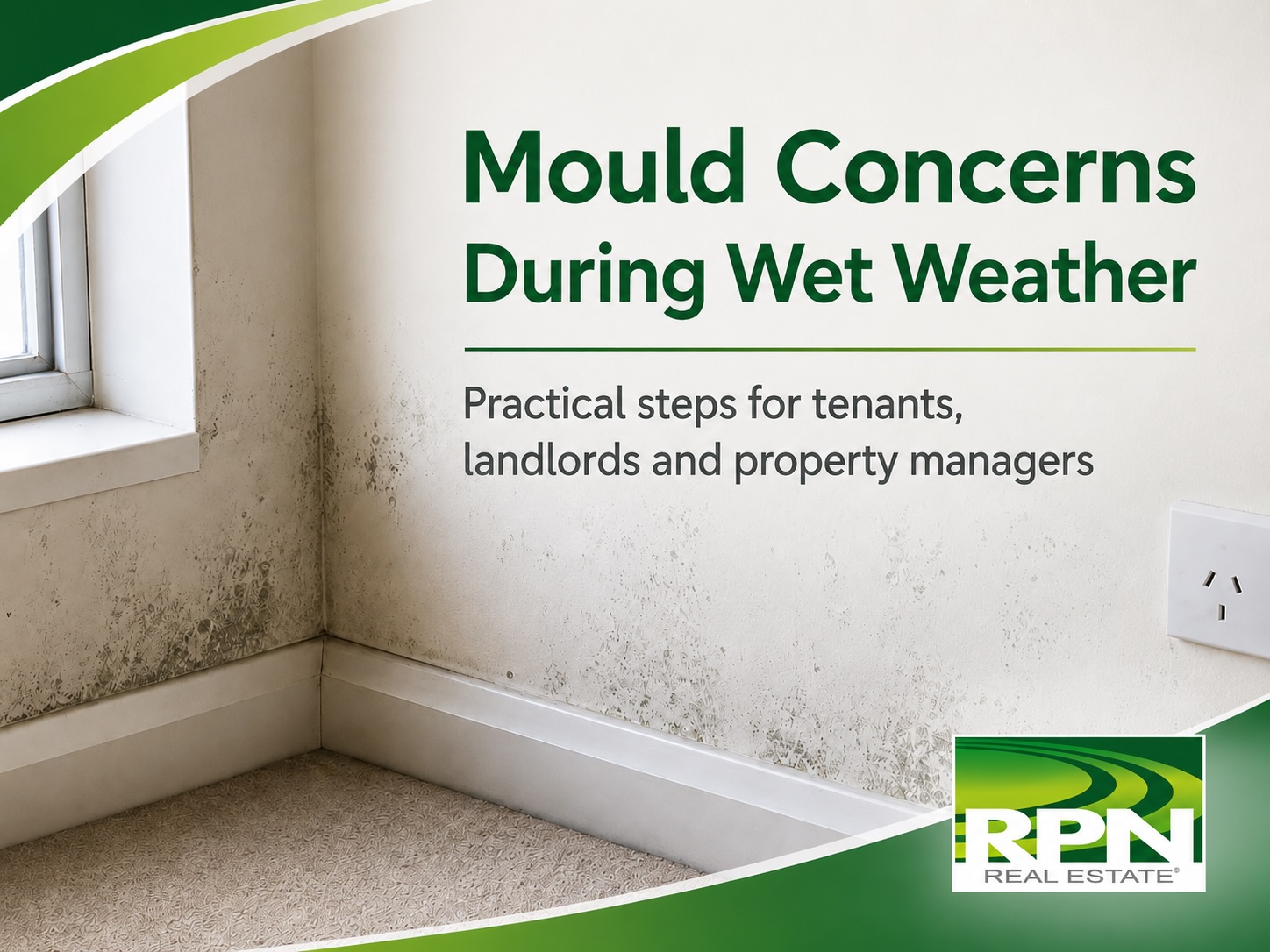
Mould in Rental Properties: A Practical Guide for Tenants, Landlords, and Managing Agents
As we move into June, the recent stretch of wet weather has made mould a more common issue for many rental properties. When rain continues for weeks, homes may take longer to dry out, condensation can build up, and areas with limited airflow can become more prone to dampness.
For tenants, this can be inconvenient and uncomfortable. For landlords, it may raise maintenance concerns. For property managers, it can require careful communication between both parties.
The most helpful approach is to deal with mould early, communicate clearly, keep good records, and understand what may be causing the issue before deciding on the next steps.
Why mould happens
Mould grows where moisture is present. It may appear on walls, ceilings, bathroom tiles, carpets, cupboards, timber, wallpaper, window frames or other damp areas.
In rental properties, mould may be linked to leaking roofs, pipes or gutters, rising damp, water entry, condensation, poor ventilation, blocked airflow, or bathrooms, kitchens and laundries without effective exhaust.
Everyday household activities can also add moisture to the home. Showering, cooking, drying clothes indoors, or placing furniture directly against cold or poorly ventilated walls can make it harder for damp areas to dry properly.
Understanding the cause is important because the best response depends on how the mould developed.
Why mould should be handled carefully
Mould should not automatically be treated as either a tenant issue or a landlord issue. A fair approach starts with looking at the evidence and working out what is likely causing the moisture.
When mould is reported, it is useful to consider
- where the mould is located,
- when it first appeared,
- whether there are signs of leaks or dampness,
- whether the area is properly ventilated, and
- whether exhaust fans are working.
It may also be helpful to check whether mould was recorded in the entry condition report, whether the issue has happened before, and what steps have already been taken.
This helps tenants, landlords and agents focus on practical next steps rather than making assumptions too early.
Responsibilities of tenants
Tenants can help by reporting mould early, especially if it keeps returning, spreads quickly, or appears near walls, ceilings, windows, carpet, cupboards or wet areas.
In some cases, tenants may be able to clean small areas of surface mould themselves as part of everyday care of the property. This may be suitable where the mould is minor, easy to reach, and appears on washable surfaces such as bathroom tiles, glass, window frames or other hard surfaces.
NSW Health advises that routine cleaning of mouldy surfaces can be done using mild detergent or a vinegar solution made with four parts vinegar to one part water. If mould is not easily removed and the item cannot be discarded, NSW Health also refers to using a diluted bleach solution, while taking care to wear protective equipment and keep the area well ventilated.
It is best to avoid dry brushing mouldy areas, as this can spread mould particles into the air. After cleaning, the area should be dried properly, as mould is more likely to return if moisture remains.
However, cleaning visible mould does not always resolve the underlying issue. If mould keeps coming back, spreads quickly, or appears to be connected to leaks, dampness, poor ventilation or water entry, tenants should let the landlord or property manager know so the cause can be looked into.
When reporting mould, tenants can provide:
- Photos of the affected area
- The location of the mould
- When it first appeared
- Whether there are signs of leaks, dampness or unusual smells
- Any steps already taken, such as cleaning, ventilating or using exhaust fans
Early communication helps everyone understand the issue sooner and makes it easier to decide what action may be needed.
Responsibilities of landlords
Landlords should consider mould reports carefully and check whether the issue may be connected to the property itself. Even when a managing agent is appointed, it is helpful for landlords to stay informed and ensure the matter is clearly communicated, properly recorded and followed up.
When an agent reports a mould concern, the landlord should ask for clear details, including where the mould is located, when it was reported, photos, any signs of leaks or dampness, and whether the issue has happened before. The landlord can also ask what action the agent recommends, such as arranging an inspection, checking for leaks, repairing ventilation, obtaining quotes, or seeking a professional assessment.
Clear information is more useful than a general description. It helps the landlord understand whether the matter may be related to maintenance, ventilation, moisture build-up, or another issue that needs further checking.
Possible property-related causes may include
- roof leaks, plumbing leaks,
- blocked gutters,
- rising damp, water entry,
- poor drainage,
- faulty ventilation, or
- exhaust fans that are not working properly.
If mould is linked to a property defect or maintenance issue, the landlord should arrange appropriate repairs. Cleaning or painting over mould may not be enough if the moisture source remains.
Landlords should also keep records of reports, photos, inspection notes, maintenance requests, quotes, invoices, completed works, and communication with the tenant and agent.
To help ensure the property is being properly managed, landlords can regularly review inspection reports, ask for photos, follow up unresolved maintenance items, and set clear expectations with the agent about communication, repair approvals and urgent issues. If updates are unclear or maintenance items remain unresolved, it may be worth asking the agent for a more detailed written update.
Responsibilities of property managers
Agents and property managers play an important role in keeping mould issues organised, documented and professionally managed. Their role is not only to respond when mould is reported, but also to help reduce the risk of mould through routine inspections, maintenance follow-up and clear communication.
During routine inspections, especially in cooler and wetter seasons, property managers can look for early signs of dampness, condensation, poor ventilation, water stains, musty smells, blocked vents, leaking taps, roof leaks, gutter issues, or mould-prone areas such as bathrooms, laundries, kitchens, cupboards and rooms with limited airflow.
Once mould is reported, property managers should respond promptly and avoid assuming the cause too early. They can:
- check the entry condition report,
- inspection notes,
- maintenance history, and
- any previous reports of leaks, dampness or ventilation issues.
They can then update the landlord with clear details and recommend the next step. This may include:
- arranging an inspection,
- sending a tradesperson,
- organising cleaning, or
- recommending a professional mould assessment.
The tenant should also receive a clear response confirming that the report has been received and explaining what will happen next.
All communication, photos, inspection notes, repair requests, quotes, invoices and completed works should be kept on record until the issue is resolved.
When a professional assessment may be useful
A professional assessment may be helpful when mould keeps returning, the affected area is large, or there are signs of leaks, dampness or structural issues.
It may also be useful where the tenant and landlord have different views about the cause, or where the agent needs clearer evidence before recommending the next step.
In some cases, the issue may involve ventilation, drainage, roofing or plumbing. A professional opinion can help clarify whether the mould is connected to property conditions, everyday use of the property, or a combination of both.
A calm process reduces disputes
Mould issues can become stressful when communication is unclear or when responsibility is assumed too quickly. A better approach is to look at the evidence, identify the likely cause, document communication, and agree on reasonable next steps.
For tenants, this means reporting mould early and using the property reasonably. For landlords, it means checking whether repairs or maintenance may be needed. For agents, it means managing the process clearly, fairly and professionally.
As wet and cooler weather continues, the risk of mould, dampness and condensation can increase across rental properties. This makes early reporting, regular inspections, clear records and timely maintenance especially useful during this season.
Handled properly, mould concerns can usually be managed without unnecessary conflict, while helping protect the property and support a better rental relationship.
For rental support, property management guidance, or assistance with mould-related concerns, contact RPN Global Sales.